top of page
  • Ícone do Instagram Preto
  • Ícone do Facebook Preto


The sea holds endless mysteries. Like a repository of memories, it crashes against the rocks, bursting with a multitude of colors and textures; it carries objects and living beings back and forth, revealing traces of a million routes and journeys. Life persists here in shards and fragments—rusting metals, metabolizing and decomposing a vast array of materials.

Elena Landinez is a collector of this "waste"—to borrow a term from the poet Manoel de Barros. Attuned to seemingly insignificant things—those that "live with their bellies close to the ground"—she assembles a collection of memories, dreams, and treasures. The poetics of this "sea-woman" wander through memories of the future, traverse magical oceans, converse with invisible beings, and reveal other worlds within our own. The window, acting as a portal, evokes movement and creates a passageway. Paving the way for the dances of the impossible, Ventanas de Mares connects the inner and outer realms, the fragment and the vastness, while calling forth the reforestation and visionary insights essential to safeguarding the life of the waters.


Laura Castro

Word artist and professor at do IHAC/UFBA


Ventanas de Mares

Exhibition at the Instituto Cervantes Salvador Salvador, Bahia De 8/03 até 31/03, 2022


Writing and drawing workshop in partnership with poet Esther Blanco. Words and drawings meeting to dance on the page. Pouring out desires, sorrows, and truths.


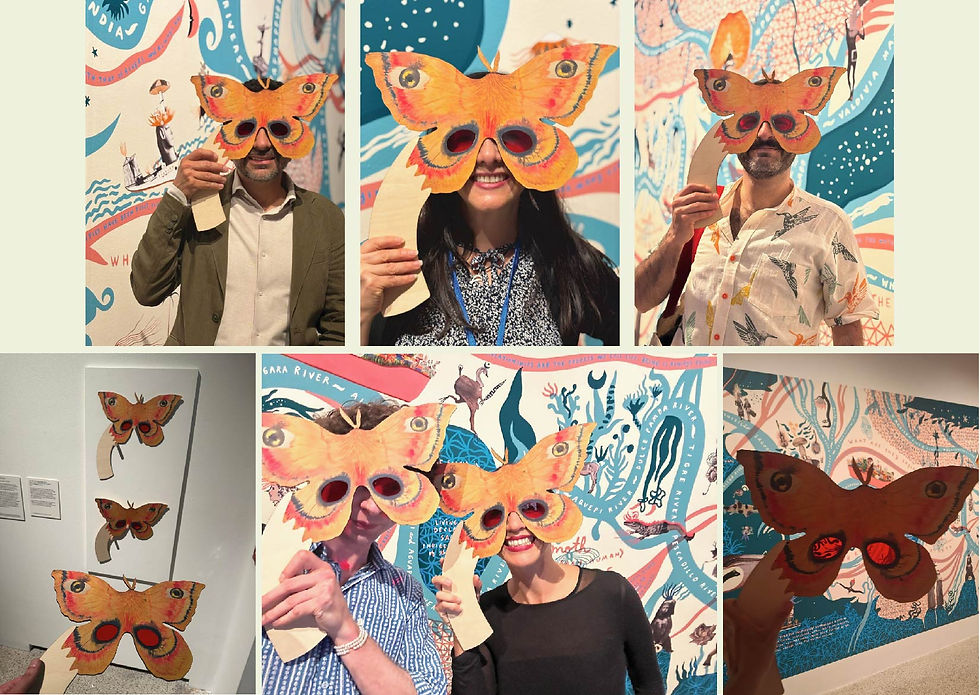
The More-Than-Human Rights Mural

Elena Landinez, César Rodríguez-Garavito

PVC-free wallpaper, acetate

Design Museum, London, 2025


This mural records the names of rivers that have been awarded legal rights by the countries through which they flow, as well as land surrounding waterways whose rights have been debated in court. These constitutional provisions, court rulings and declarations protect the integrity of rivers and, by extension, the many species (including humans) who depoend on them.


To read excerpts from texts on more-than-human rights, look at the mural through the masks. For more information and to read the texts in full, go to the website futureobservatory.org


What can we say to the Sea?


An installation showcasing an island of collected plastics and objects gathered during different tides on the beaches of Salvador. Generally, on rainy days, the beaches are flooded with plastic and trash carried by the waters flowing into the sea. Plastic is a species created by us, humans; its usefulness today surpasses the limits of invasiveness.


This installation took place during the artistic occupation, Possible Futures, at the Zona Fluxus studio during the month of November 2022.


How can we devise solutions to break free from the production and consumption chain we are currently in?

What are these other bodies that inhabit the planet?

What should I tell them?

How can we live together in the city, in the forest, and at sea?

The struggle is collective.


Copyright © 2026 Elena Landinez

astrobolina@gmail.com  

Brazil (+55 71) 991919249

Subscribe if you would like to receive news

Thanks for submitting!

bottom of page